Anthony Zaccaria
Spirituality - St. Anthony Mary Zaccaria Podcast Duchowość - św. Antoniego Marii Zaccarii






About St. Anthony Mary Zaccaria
In the first half of the fifteenth century in Italy shone the luminous figure of Anthony Mary Zaccaria. This young saint, full of passion for God's love, was a great reformer of religious customs of the clergy and the Christian people. Above all, he was the founder of the Clerics Regular of St. Paul (Barnabites), the Angelic Sisters of St. Paul, and the Laity of St. Paul.
Anthony Mary Zaccaria, born in Cremona, Italy in 1502, was a student and graduate in medicine from the University of Padua; a doctor of body and soul in his native city; a fervent catechist and a zealous priest in Milan and elsewhere. For a decade his apostolate was characterized by an intense devotion to the Most Blessed Sacrament of the altar (he was the promoter of the Forty Hours Devotion), and by a passionate love of the cross and the crucified Christ (he instituted the ringing of bells on Friday afternoon to commemorate Christ's death). Anthony Mary was guided by an extraordinary zeal of St. Paul, chosen by him to be his master and model on earth, and his special patron in heaven. old,
Exhausted from his pastoral work, Anthony Mary died at only 36 years leaving behind admirable examples of penance and of spirituality.
In the novena here presented, his ascetic-mystic thought continuously emerges. This thought can be found in his six Sermons and eleven Letters, which remained as his testament and a mirror of his soul and his missionary call: in these writings resounds an unceasing appeal against vices, and toward holiness.
Cardinal Ratzinger wrote: "I have to say that the image of this saint is dear to me because he is one of the great figures of Catholic reform... an authentic man of God and of the Church, a man burning with zeal, a demanding forger of consciences, a true leader able to convert and lead others to good."
Like all the saints, Zaccaria is a figure of permanent relevance: an encounter with him symbolizes an invitation to return to a charism of a unique vocation, a return desired by the Second Vatican Council, as an indispensable element of true renewal. The Church venerates the saints and honors their images. Celebrating their names and their memory, she proclaims Christ's marvels in his servants and proposes to the faithful examples to imitate (Sacrosantum Concilium, 11).
The saints manifest the face and the presence of God in the world. They contribute to the spiritual life of the Church on earth, and form with us one mystical body. As friends and coheirs of Christ, they intercede for us. As our brothers and benefactors, they teach us the way to reach heaven. (Lumen Gentium, 49-50)
Anthony Mary Zaccaria merits to be known and followed in his teachings: he counts among the category of priests, who in the course of centuries, have left a splendid example of holiness. As a spiritual master, he continues to spread and proclaim the Word of God and to teach the "sublime wisdom of Jesus Christ" (Liturgy of July 5)
Bishop Andrea M. Erba, CRSP
Bishop of Velletri-Segni, Rome, 15 November 2008 | Solemnity of Mother of Divine Providence
O Św. Antonim Marii Zaccarii
W pierwszej połowie XVI wieku we Włoszech zajaśniała świetlista postać Antoniego Marii Zaccarii. Ten młody święty, pełen pasji i miłości Bożej, był wielkim reformatorem życia religijnego duchowieństwa i ludu chrześcijańskiego. Był przede wszystkim założycielem Zakonu Księży Regularnych św. Pawła zwanych Barnabitami, Sióstr Anielanek św. Pawła i Laikatu św. Pawła.
Antoni Maria Zaccaria, urodzony w Cremonie we Włoszech w 1502 r., był studentem i absolwentem medycyny na Uniwersytecie w Padwie: lekarzem ciała i duszy w swoim rodzinnym mieście, żarliwym katechetą, gorliwym kapłanem w Mediolanie i nie tylko. Przez dekadę, jego apostolat charakteryzowało intensywne nabożeństwo do Najświętszego Sakramentu (był promotorem czterdziestogodzinnego nabożeństwa) oraz żarliwa miłość do Krzyża i Chrystusa ukrzyżowanego (ustanowił bicie dzwonów w piątek o godzinie 15-tej na pamiątkę śmierci Jezusa). Antonim Marią kierowała niezwykła gorliwość św. Pawła, wybranego przez niego na swego mistrza i wzór na ziemi, a szczególnego patrona w niebie. Wyczerpany pracą duszpasterską Antoni Maria umiera w wieku zaledwie 36 lat, pozostawiając po sobie godne podziwu przykłady pokuty i duchowości.
Joseph Kardynał Ratzinger napisał: „Muszę też przyznać, że postać tego Świętego Antoniego Marii Zaccarii jest mi szczególnie droga, gdyż pozostaje on jedną z wielkich osobowości związanych z reformą katolicką XVI wieku (…) autentycznym, żarliwym w wierze człowiekiem Boga i Kościoła, wymagającym formatorem sumień, przewodnikiem zdolnym pociągnąć innych ku dobru i nawracać” (Antonio Montonati, Rozpalił płomień wiary, s.14,15).
Podobnie jak wszyscy święci, Zaccaria jest postacią o nieprzemijającej aktualności. Spotkanie z Nim symbolizuje zaproszenie do upragnionego powrotu do wyjątkowego charyzmatu powołania, jako nieodzownego elementu prawdziwej odnowy ogłoszonym przez Sobór Watykański II. Kościół czci świętych i czci ich wizerunki. Czcząc ich imiona i pamięć, głosi cuda Chrystusa w Jego sługach i proponuje wiernym przykłady do naśladowania (Sacrosantum Concilium, 11). Święci ukazują oblicze i obecność Boga w świecie. To oni przyczyniają się do duchowego życia Kościoła na ziemi i tworzą z nami jedno mistyczne ciało. Jako przyjaciele i współdziedzice Chrystusa wstawiają się za nami. Jako nasi bracia i dobroczyńcy, uczą nas drogi do nieba (Lumen Gentium, 49-50).
Antoni Maria Zaccaria zasługuje na to, by być znanym i naśladowanym w jego nauczaniu: zalicza się do kategorii kapłanów, którzy na przestrzeni wieków pozostawili wspaniały przykład świętości. Jako mistrz duchowy nadal rozpowszechnia i głosi Słowo Boże oraz naucza o „wzniosłej mądrości Jezusa Chrystusa” (liturgia 5 lipca)."
Biskup Andrea M. Erba CRSP
Biskup Andrea M. Erba, CRSP
Biskup Velletri Segni,
Rzym, 15 listopada 2008
Uroczystość Matki Boskiej Opatrzności
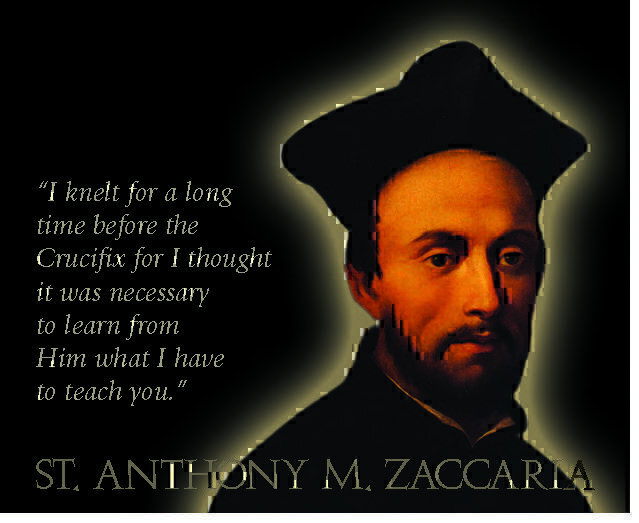
Letters of St. Anthony Mary Zaccaria
Listy św. Antoniego Marii Zaccarii
W listach odnajdujemy najbardziej autentyczny obraz człowieka, ponieważ ujawniają się jego upodobania, delikatność, naturalna surowość, pochłonięcie miłością własną lub miłość do Boga i bliźniego. Dusza i serce św. Antoniego Marii były proste jak dusza i serce św. Pawła, jego duchowego ojca.
Z głębokim żalem musimy przyznać, że Ojcowie Barnabici i Siostry Anielskie – odzyskali tylko 12 listów swojego Założyciela, św. Antoniego Marii. Niemniej jednak listy te są już obfitością tego, co powinniśmy wiedzieć o Świętym, o naturze jego duszy i jego wielkiej duchowości.
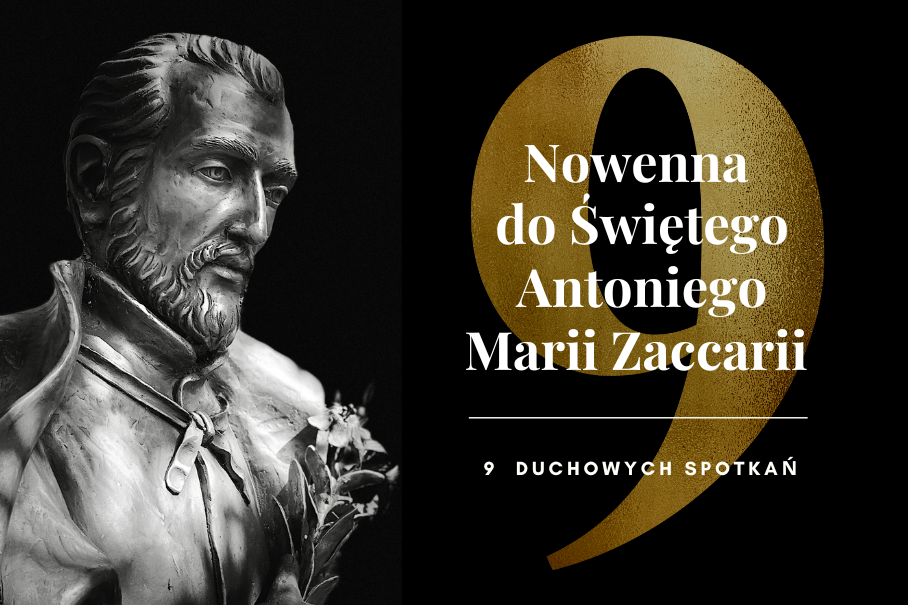
Nowenna do św. Antoniego M. Zaccarii
Nowenna ukazuje myśl ascetyczno-mistyczną św. Antoniego Marii. Tę myśl można znaleźć w jego sześciu Kazaniach i jedenastu Listach, które pozostały jego testamentem, zwierciadłem duszy i powołania misyjnego. W jego pismach rozbrzmiewa nieustanne wezwanie do świętości.
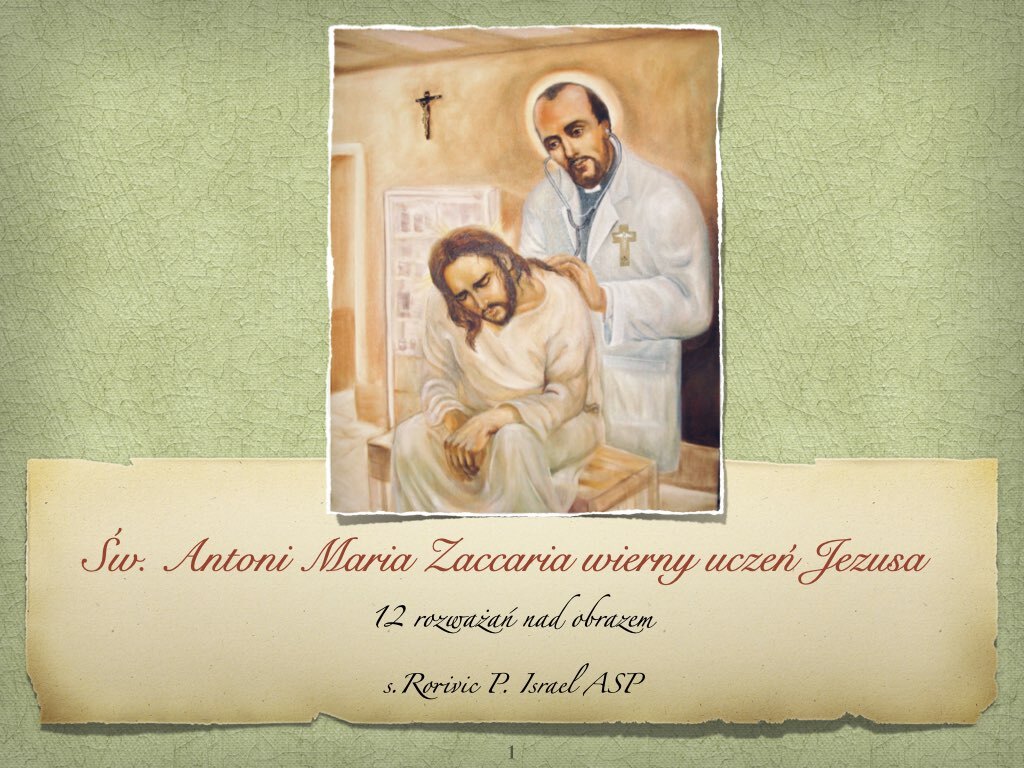
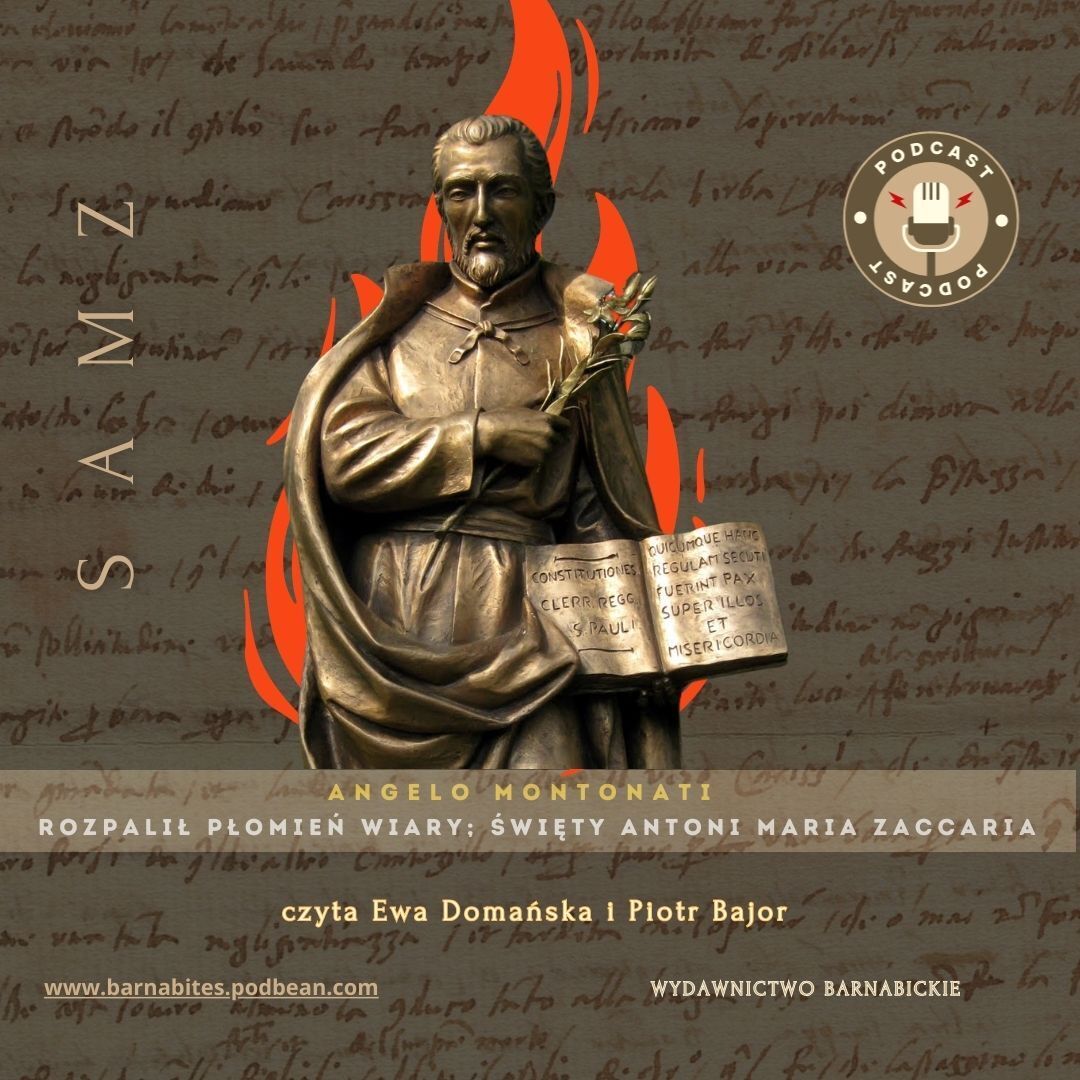
Rozpalił płomień wiary: św. Antoni Maria Zaccaria
Jest to audiobook-hagiografia o św. Antonim Marii Zaccarii na podstawie książki Angelo Montonatiego "Rozpalił Płomień Wiary" . Ten audiobook składa się z 50 odcinków.
Czytają Ewa Domańska i Piotr Bajor.
Każdy odcinek audiobooka rozpoczyna i kończy fragment utworu „J.S. Bach: Sonata for Violin Solo No. 1 in G Minor, BWV 1001 - I. Adagio” w wykonaniu Bogumiły Bajor.
Zapraszamy do zapoznaniem się z świętym żywotem Antoniego Marii
Episodes
Jul 10, 2014
Jul 10, 2014
23 min
Photo courtesy of The Station of the CrossMeditation entitled "Unfurl your flags, my dear daughters" by Fr. Peter Calabrese, CRSP was given on the on an occasion of the anniversary of Saint Anthony Mary Zaccaria's canonization. You also listen to Fr. Peter Calabrese – Current Events Wednesdays on The Station of the Cross Fr. Peter Calabrese is the provincial vocation director for the Barnabite Fathers. He resides at the Our Lady of Fatima Shrine in Lewiston, New York, near Niagara Falls. Fr. Peter is originally from Philadelphia and is an avid fan of the Flyers.
Jul 9, 2014
Jul 9, 2014
5 min
HOLY SPIRIT RADIO WISP 1570 AM Doylestown | WCOL 1420 AM Coatesville Run With Hearts On Fire presented by Mrs. Kathy Gasson on her program entitled Songs For the Spirit on July 8, 2014. Thank you. Tunein Holy Spirit Radio
Jul 6, 2014
Jul 6, 2014
1 min
Photo courtesy of The Station of the CrossMeditation entitled "Let Us Run Like Madmen not Only Toward God but Also Toward Our Neighbors" by Fr. Peter Calabrese, CRSP was given on the on an occasion of the anniversary of Saint Anthony Mary Zaccaria's canonization. You also listen to Fr. Peter Calabrese, CRSP – Current Events Wednesdays on The Station of the Cross Fr. Peter Calabrese is the provincial vocation director for the Barnabite Fathers. He resides at the Our Lady of Fatima Shrine in Lewiston, New York, near Niagara Falls. Fr. Peter is originally from Philadelphia and is an avid fan of the Flyers.
Jun 25, 2014
Jun 25, 2014
3 min
Letter 1 - Being Thankful to God wCremona, May 31, 1530To the Reverend Father, Fra Battista da Crema,1of the Order of Preachers of St. Dominic,my venerable father in Christ.In Milan REVEREND FATHER IN CHRIST,I give thanks to God, for in His mercy He does not treat me as I deserve, and He subjects me only to such small trials that I tend to be unaware of them because of some reproachable insensitivity of mine, as our Donna8 Francesca of Vicenza9 used to remark while we were riding on horseback. I say this because it would have been a great consolation to me to receive a letter from you. But I understand that either your poor health or, no doubt, other good reasons have prevented you from writing at all. May you, dear Father, conform to God’s will, for I myself intend to conform to it, in spite of everything, and come what may. From my incident with Mr. Gerolamo10 something resulted about which the carrier Mr. Benedetto Romani11 will tell you. I won’t mention it, for it is quite complicated to express and requires many explanations. Mr. Romani will explain it to you by word of mouth. In all truth, dear Father, my wish is that you yourself would give it a satisfactory solution. It is up to you, of course, to keep me informed about this or any other matter, which you may think useful for me to know. I think our illustrious Countess12 and Donna Francesca are fully excused for not writing to me since they must be busy; and they will in turn excuse me, for I, too, am hindered from doing so. Recommend me to their prayers. The present carrier has expressed to me some of his ideas and says that he is somewhat acquainted with you. I heartily recommend him to you as, in my judgment, he seems to be good and simple, an upright man who fears God;13 he will do everything for you, and you will not be disappointed because I found him to be obedient and one of those who are said (...)14 both in actions and words. You will get to know him better than I can describe him. For God’s sake, may he be dear to you, as I am sure he will. My affairs move slowly, and my negligence delays them even more. Yet I will keep attending to them. My mother15 recommends herself to the prayers of the Countess and of Donna Francesca, and, first of all, to your prayers; Fra Bono16 and Mr. Francesco’s son17 asks for the same favor. Please, dear Father, don’t forsake me, and be my patron saint before God. May He set me free from my imperfections, faint-heartedness, and pride.From Cremona, the last day of May, 1530. The Victory Over Oneself should be written by me with deeds, not with ink.18 Your son in Christ,Anthony M. Zaccaria, PriestREFLECTIONSGod is generous and merciful. He does not only respond to our prayers, he also anticipates them. He wants our own good more than we ourselves do.Often times our response to God’s love is indifference. We give priority to things, and even ourselves, rather than God.Those who love conform themselves to God’s will. They renounce love of self; they “die to themselves.”The journey toward perfection is often slow. It may stop and even slip back. So at times we need a shake-up. We do not get discouraged. With God’s help, all is possible.We must devote ourselves to help others walk in the Spirit and to spur them on to give the best they can.QUESTIONSHow much interest do I take in, and how much time do I devote to, God and the Church?Am I aware that one gauge of my being in God is the time I devote to him and the importance I give to spiritual matters in my daily activities?Am I willing to sacrifice my own convenience for love of God?As I examine my life, can I honestly say that I have become better over the years?Do I encourage and help others grow spiritually?FOOTNOTES1. See Introduction of this letter and also Letters IV, V, and VII.2. See Antonio M. Gentili, “S. Antonio M. Zaccaria. Appunti per una Lettura Spirituale degli Scritti,” Quaderni di Vita Barnabitica 4 (1980) Part I; 6 (1983) Part II.3. Via de aperta verità (Way of Open Truth, 1523); Cognitione et vittoria de se stesso (The Knowledge of, and Victory over, Oneself, 1531); Philosophia divina (Divine Philosophy, 1531); Specchio interiore (Interior Mirror, published posthumously by Ludovica Torelli in 1540); Sentenze spirituali (Spiritual Sayings, published posthumously in 1583 by Giovan Paolo Folperto with the title Detti notabili [Notable Sayings]). 4. These were the reports of the meetings of the St. Barnabas community, the only Barnabite community until 1557.5. See p. 17, par. 3.6. See Angelo Cortenovis, Lettere Familiari (Milan, 1862) 252–253.7. Information on the original autograph and its copies was kindly supplied by Fr. Giuseppe M. Cagni, archivist of the General Archives (February 1998).8. Title given a lady in Italy.9. A laywoman from Vicenza who was called “Marescalca” (blacksmith) after her father’s trade. She was a member of the first mission band in Vicenza (1537). She was one of the widows (like Porzia Negri and Giulia Sfondrati) associated with the Angelics.10. Unidentified.11. No further identification available.12. Ludovica (Paola) Torelli (1499–1569), Countess of Guastalla. See Letter V, Introduction; also Letters I, IV, VI, and IX.13. Job 2:314. In light of the context, the illegible words in the manuscript could mean: “to be trustworthy.”15. Antonia Pescaroli: she married Lazzaro Zaccaria on February 2, 1501, and gave birth to Anthony Mary during the first half of December 1502. She died in 1544. See also Letter V.16. Fra Bono Lizzari, a hermit from Cremona. Together with Anthony Mary he was one of the earliest promoters of the Forty Hours Devotion. Although he secured permission to hold this devotion as early as 1534, it was actually introduced only three years later, in Milan. See also Letters II, III, and VI.17. Father and son most likely from Cremona.18. Anthony Mary is alluding to one of the spiritual writings of Fra Battista da Crema - perhaps his masterpiece - The Knowledge of, and Victory over, Oneself, which was to be published in Milan, March 31, 1531. Apparently, Fra Battista invited Anthony Mary to help him write that book, but the latter preferred to decline, perhaps out of humility.
Jun 25, 2014
Jun 25, 2014
11 min
Letter - 9 - The Saints, True Imitators of Christ
Guastalla, June 10, 1539
MY ONE AND ONLY BELOVED MOTHER AND MY OBEDIENT DAUGHTERS IN CHRIST, GREETINGS.
Tomorrow we celebrate the Memorial of St. Barnabas, the companion of our common patron, the chaste Paul. I can’t help taking this occasion to use, in dealing with you, the same approach that Barnabas used in dealing with the great Paul who wanted to be a living example of the suffering Christ in reality as well as in everyone’s estimation.
You must know, of course, how St. Paul, just after his conversion, went for the first time to Jerusalem. He tried every possible way to mingle with the other Christians in order to get acquainted with them and to be acknowledged by them as a Christian; but they were afraid and suspicious of him as though he were still the same persecutor, and so they dared not keep his company.
That was when Barnabas, leading Paul by the hand, presented him to the Apostles and told them: “Here he is, the one who was, etc.; and then Christ appeared to him, etc.; and he did this and that, etc.”150 By presenting Paul in person this way, Barnabas made him known to all and showed him as a pillar of the Church and the one who had almost attained the first place in the apostolic mission. All the while Paul was keeping secret his own merits, and at the same time he was drinking great draughts of self-satisfaction, unafraid of savoring his own exceedingly sweet praises.
Likewise, dear Mother, if it pleases you, I would like to show you how freely great saints behave. Yes, I would like to make you see that what in them, because of their lofty perfection, is an experience and a sure sign of a consummated holiness, can become in us, instead, an occasion of certain ruin or a sure sign of not having eliminated our first and inveterate bad habits, as is apparent in the story told by St. John Climacus about a certain saint who felt so sure of being totally free of gluttony that he tempted the devil with a bunch of grapes to see if the latter would in turn tempt him in the same way.151 The other case is that of someone who wants to know for certain to what extent a certain passion is suppressed in himself or in others. He first arouses that passion by words, gestures, and the like, then, observing the matter very closely, waits for the results, and from them he deduces both his own and other people’s interior state.
I will not mention here certain things that only you can understand, but rather those which also our Angelics can grasp, leaving those other things for your spirit to ponder.
Barnabas says: “Behold Saul,” that is, the very countenance of our sinful old Man—the mirror of our first evil inclinations or passions.
Look, I say, at the idle talk of this or that would-be saint: she chatters endlessly like a finch or a monkey; she is seldom seen at prayer, always involved, as she is, in external occupations; she enjoys sleeping a lot, even lying abed lazily. Is this not the face of Saul, that is, the picture of our sinful old Man?
But this is nothing yet. She wants to be served; she keeps her cell well equipped with comforts and elegance; she always speaks in a reproachful mood; she is never ready to say a comforting word to anybody; she shows that she holds nobody in esteem. Well, what do you think all these attitudes mean, but that the bad habits of the old self are still laying hold of her?
Moreover, she is never satisfied; she is always under the siege of temptation, and her spiritual knowledge is always cloudy and doubtful. In a word: she gives clear signs of being the same person as she was when living in plain clothes, or, at least, of being still imperfect or very little changed.
Her stomach relishes only the best of everything. What else does that prove, but that she is a first rate glutton? She can hardly wait without showing anger on her face; she cannot keep herself kneeling without leaning on the edge of the seat; she is so sensitive to everything around her that her blood pressure goes up easily. What else does all this reveal but a great moral feebleness?
And see for yourselves if this is not so: she gets easily tired; she suffers headaches when she has to sit at the grate; she cannot bear the troubles of her neighbor. [In this description] one can see everything except the portrait of a mature person.
All this is Saul—namely, the portrait of the imperfect person. “But keep quiet,” says Barnabas, “don’t forget that to a person, like the one just described Christ appeared, etc...” If you pay attention, you will find hidden that this person is a saint interiorly and exteriorly. If you take the trouble to understand her every aspect, as I lay open this poor creature, I am quite sure she will blush and lower her head to conceal her real self.
But see whether, when she speaks, she is not touching and inflaming you deeply; when she speaks seeming nonsense, she is actually fully aware of your situation and works on it accordingly; see whether in her constant restlessness she doesn’t achieve something new for herself and for others; see whether, when she leaves you, she never omits an edifying word or unspoken sign or gesture; see whether in her seeming absent-mindedness she is actually fully aware of your every move and inspires you with good thoughts and stimulating suggestions.
Now, keep perfectly quiet, for I have something else to show you. When she misses the time for prayer, just then she manifests her rich interior life. When you see her upset and in pain, as if anxious to learn something from untutored people, she is only showing self-contempt and a willingness to appear unlearned. When you see her elegantly arranging her cell, she is actually trying to be an object of ridicule and wishes to hide the consolations received from Jesus Crucified as well as the instructions imparted by St. Paul. With one and the same word she brings both death and life; in one swoop she inflicts wounds and heals them.152
Enough. Anyone willing to examine carefully her actions will indeed recognize in her Saul’s portrait, but Barnabas will assure us that she is not what she appears to be now, and what she appeared to be in the past.
My dear Mother, I could go on and on, but I would not like to arouse bad feelings against me. Besides, you can tell them the rest.
The only thing I wish to add is this: tell the Angelics not to take such liberties. I can assure them that they would achieve results quite opposite to those obtained by that person, and, instead of making great strides in perfection, they would perhaps descend deep down into the hell of absolute imperfection.
Therefore, not idle talk, but a strict silence is expedient and necessary for them. Acting, talking, and thinking without interior and exterior control is unbecoming and unprofitable to them. Failure to renounce themselves while following their own whims could poison them to death since their wishes are worldly. Were they in a position of authority, they would grow presumptuous; were they knowledgeable, they would become proud; were their spirit dissipated, they would become slack; were they unwilling to renounce their will, even in good things, they would not only become coarse but would entirely disaffect themselves from Paul and his way of life.
Do reflect and see what a great harm is caused by seeking one’s comfort, by drinking [and eating] with pleasure, if not so much wine and exquisite food, at least maudlin sentimentality and self-complacency. If they are not blind, what I have just said will show them how much spiritual harm will come about.
In conclusion, tell them that this Paul preaches to them a Christ Crucified under every aspect: crucified not only in His own body, but in theirs, too—and entreat them to chew well this one word. If, because of their obtuseness, they do not quite understand it, ask my teacher Paola153 to make it clear to them; for I am sure that that tongue so inflamed and so sharp will supply what I would tell them.
That’s it, dear Mother.
[Guastalla], June 10, 1539.
Your Father and son,
Anthony Mary, Priest
REFLECTIONS
We display false humility when, while belittling ourselves in public, we hold in our heart a great opinion of ourselves which becomes manifest when others belittle us.
Persons who are truly holy sometimes strive to appear imperfect in order not to be praised by people. They use ways and methods proper of sinners, but these are only expedients to hide true holiness.
In all of us who are truly imperfect those ways and methods are not expedients but rather real defects. Even though we may try to pass them as expedients we have purposely created to appear humble, they remain outright vices.
Idle talk, lack of perseverance in prayer, and laziness are real defects, not pretenses.
And when, feigning illness or inability, we demand to be served, get angry if we are not treated as we would like, and are never satisfied with what we receive, we show ourselves to be not only imperfect but even reprehensible.
Habitual discontent with the meals that are served, good as they may be, anger, impatience, refusal to kneel on the pretext of infirmity are all signs of lukewarmness and rejection of the cross.
We need to limit idle talk, practice internal and external obedience, die to ourselves, deny our ego, and think little of those positions that could excessively increase our self-esteem and drag us into self-flattery.
We are called to crucify our own selfishness and imitate Christ Crucified who humbled himself to the point of death, even death on a cross.
QUESTIONS
Do I at times display a seeming humility in order to be valued as simple and modest?
Am I able to hide and keep my good deeds unknown so that I will not be praised for them, for after all they are a gift from God?
Do I at times pass as harm sustained real faults, human limitations, illnesses caused by bad habits, all things of which I profess to be innocent even though I am not?
Can it also happen that words, useless talk, erratic prayer habits, lack of commitment, are made believe to be things we end up doing just because we need to vent our feelings, or because we are weak, frustrated, tried by the ups and downs of life, crushed by the serious difficulties we encounter, when in reality they are simply signs of spiritual indolence?
Do I sometimes argue that I deserve better meals due to what I do and loose my temper if I am not pleased?
Do I lessen my commitment to prayer when I am tired?
Do I find it hard to obey and submit to others?
FOOTNOTES
141. See Letter I, Introduction.
142. See n. 59.
143. See Gabuzio 87; Premoli, Storia 117–118; Giuseppe M. Cagni, “Negri o Besozzi?” Barnabiti Studi 9 (1989) 182. For details on Paola Antonia’s charismatic role among the first generation of Barnabites, see Massimo Firpo, “Paola Antonia Negri da ‘Divina Madre Maestra” a ‘spirito diabolico’,” Barnabiti Studi 7 (1990) 23, 26–35. On Besozzi see n. 181.
144. Sergio Pagano, “I processi di beatificazione e canonizzazione di S. Antonia Maria Zaccaria (1802–1897),” Quarderni di Vita Barnabitica 10 (1997) 47. Giuseppe M. Cagni, “Gaetano Bugati e le’ Attestationi’ del Padre Battista Soresina: un importante recuperato alla storiografia barnabitica,” Barnabiti Studi 11 (1994) 38, n. 130.
145. See Pagano 48.
146. See Cagni, “Negri o Besozzi?” 182.
147. For an extensive discussion of this viewpoint see Firpo, “Paola Antonia.” 35–66.
148. See Pagano 50–52, 54. According to Pagano the interpretation of this letter is still an open question and is not small matter: On the threshold of death, was Anthony Mary still giving full credit to Paola Antonia or was he wisely distancing himself from her?
149. According to Cagni, “Negri o Besozzi?” 183, this letter directed to “my one and only beloved Mother (Paola Antonia Negri) and my obedient daughters in Christ (her novices)” was a “conference letter.” This kind of letter would replace an actual conference held on the eve of a liturgical feast. These conferences were a well-established tradition dating back to the days of the Oratory of Eternal Wisdom. (see Letter II, Introduction), or maybe even to the “Amicizia” in Cremona (see n. 44).
150. Acts 9:26–27.
151. Apparently quoted from memory, Anthony Mary’s version of the story is basically the same as one found in St. John Climacus’ The Ladder of Divine Ascent (New York: Paulist 1982, p. 249).
152. Dt 32:39.
153. Most likely Ludovica (Paola) Torelli. See n. 12.
Feb 27, 2014
Feb 27, 2014
3 min
Vocal: Michael Botula
Authors: M. Brusati, M. Labellarte, M. Versaci, R. Israel
Musical Arrangements: M. Varini
Recording & Mix: J. Ricotti
WORLDLY RICHES, FAME, AND SUCCESS
WEREN’T ENOUGH TO LIVE FOR
HE WAS EMPTY
IN THE GOSPEL HE TRIED TO FIND THE ONE
WHO GIVES MEANING TO LIFE,
THE TRUE SENSE OF LIFE
AND THEN ONE DAY HIS MOTHER SPOKE
HE UNDERSTOOD THAT TO BE PERFECT,
PERFECT LIKE JESUS
‘TAKE UP THE CROSS OF MERCY, ARMS OPEN WIDE,
AND FOLLOW JESUS AND STAY BEHIND HIM,
REALLY CHOOSE HIM.
WALKING THROUGH THE CITIES HE PROCLAIMED
THE LIVING WORD OF WISDOM
AND THE SPIRIT OF LIFE
EVERY TEPID HEART BURST FORTH WITH FLAMES
THE GOSPEL LIKE A FIRE
BECOMES DESIRE
AND THROUGH THE WITNESS OF SAINT PAUL
HE UNDERSTOOD THAT TO BE PERFECT,
PERFECT LIKE JESUS
TO LIVE ONE’S LIFE WITH BURNING LOVE, THE LOVE FOR CHRIST,
AND THROUGH HIS CROSS BECOME A BRAND NEW LIGHT
SO RUN WITH YOUR HEARTS ON FIRE
GO, RUNNING TOWARD GOD
TOWARD OTHERS
LIKE I DO
BE TRULY SAINTS, SHINE LIKE SAPPHIRES
GO, RUNNING TOWARD GOD
TOWARD OTHERS
LIKE NO OTHER
COME, RUNNING WITH ME
WORLDLY RICHES, FAME, AND SUCCESS
AREN'T ENOUGH TO LIVE FOR
THEY LEAVE ME EMPTY
IN THE GOSPEL'S WORDS I CAN FIND
A BETTER WAY TO SPEND LIFE
AND MAKE SENSE OF LIFE
AND I'LL BE STRONGER, FEAR NO LONGER, YES I'LL TRY
TO BE LIKE JESUS
AND LIKE NO OTHER
JUST LIVE MY LIFE WITH BURNING LOVE, THE LOVE FOR CHRIST,
AND WITH HIS CROSS BECOME A BRAND NEW LIGHT
REFRAIN
___________________________________________________________________________________________
| All Right Reserved.| Distributed by Barnabite Fathers of the North American Province |4301 Hecktown Road, Bethlehem, PA 18020, USA |BarnabitePublications@gmail.com
Nov 1, 2013
Nov 1, 2013
6 min
There is a close relation between the Holy Eucharist and vocations to the priesthood and the consecrated life.
Nov 1, 2013
Nov 1, 2013